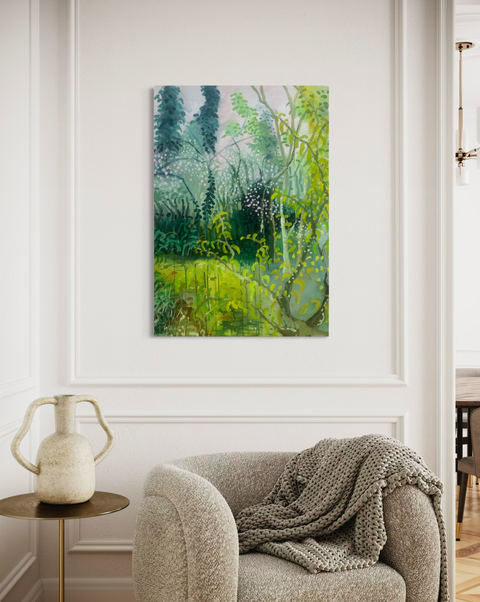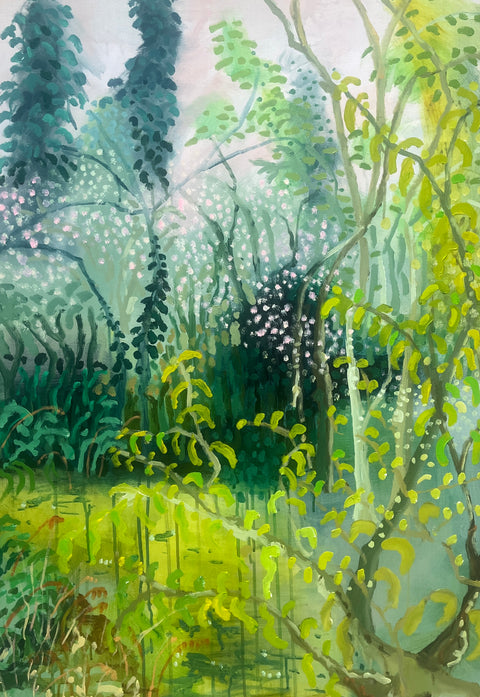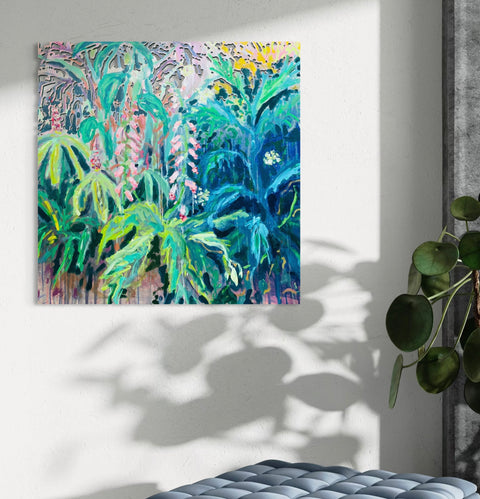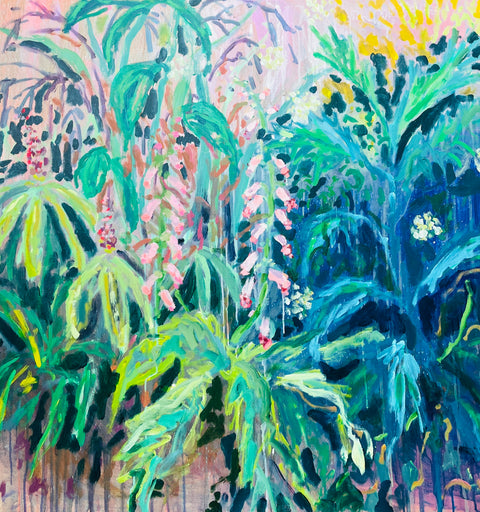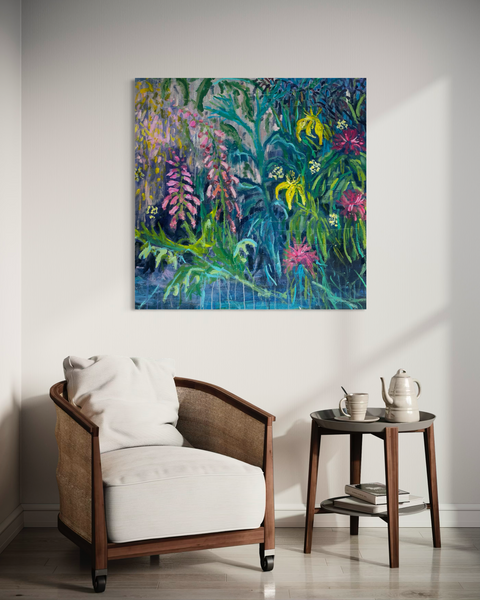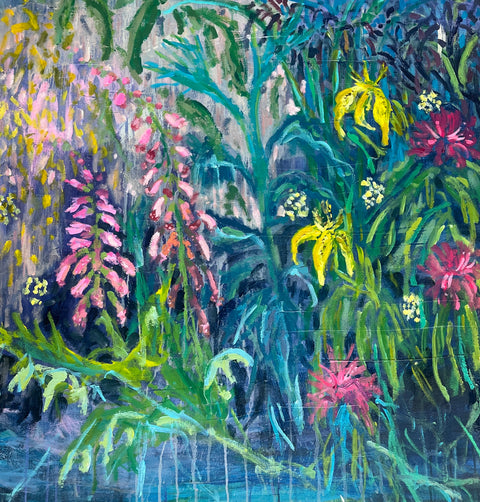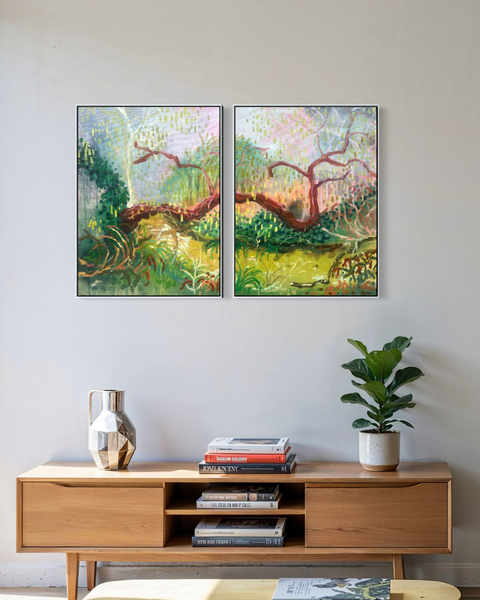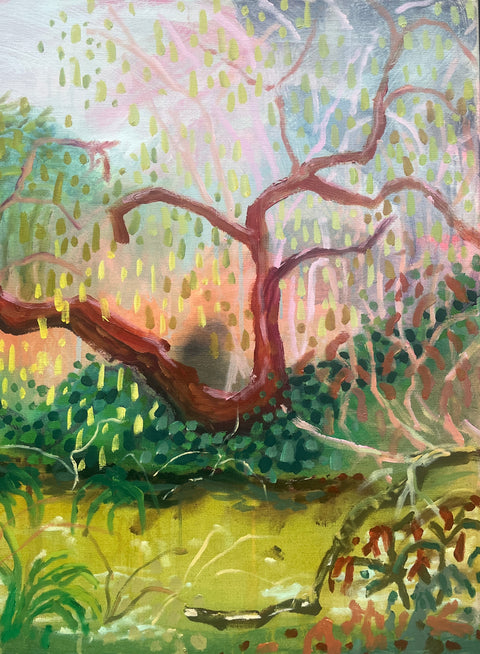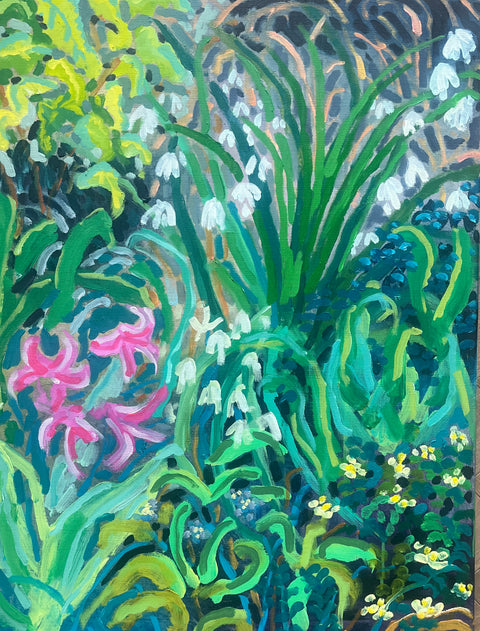
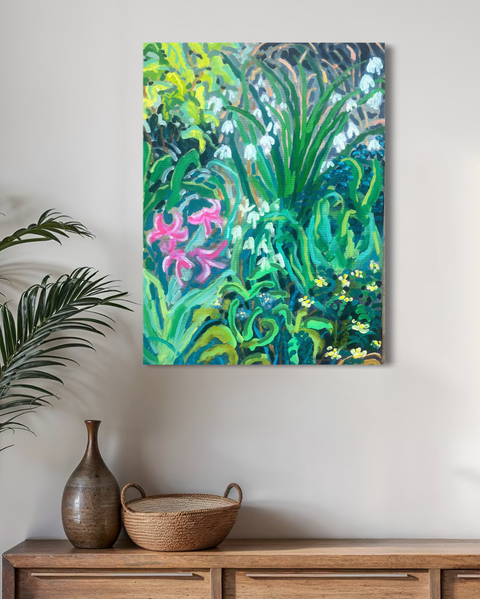
There is a phrase Alice Gavin Atashkar returns to when describing what she hopes her work does: a ‘joy-pop’ in the heart of the viewer. It is a deceptively simple ambition. The paintings themselves - lush, layered, explosive with colour and botanical life - are anything but simple. But that directness of intention, that desire to create a felt experience rather than an intellectual one, runs through everything she makes.
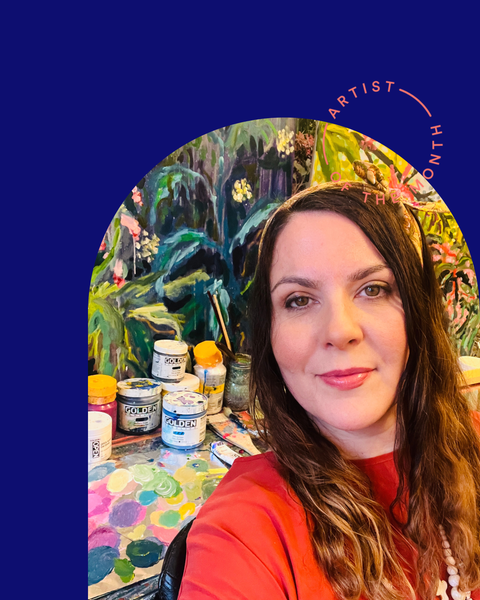
Gavin Atashkar is a self-taught painter based in North London and a member of the ArtCan global arts collective. From childhood she was drawn to three things that remain the core of her practice today: colour, texture, and the natural world. Growing up in a South Manchester textile workshop shaped her instinctive feeling for surface and material; moving to London revealed an unexpected abundance of nature on the doorstep - the reserves, valley walks and wild margins that now supply the raw material for most of her work.
“I’m interested in how we attach meaning to marks, and how that meaning is shaped over time by intersectional aspects. My connection to texture and colour has been shaped by growing up in a South Manchester textile workshop, and my Northern roots are in awe of London’s access to nature.”
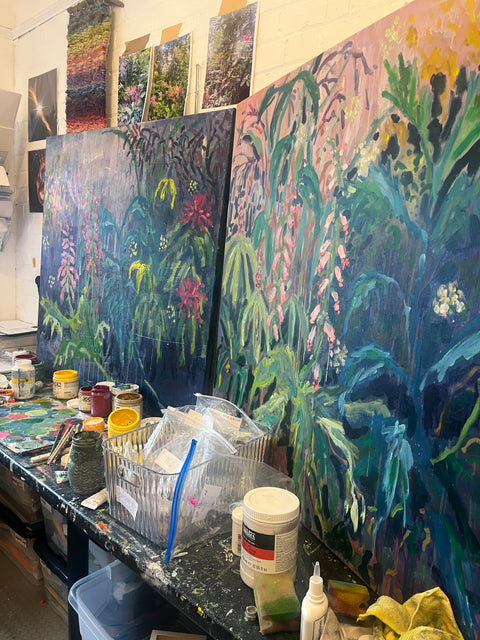
Her practice is underpinned by a body of professional knowledge that gives it unusual depth. Gavin Atashkar holds an MA in Art Psychotherapy from the University of Hertfordshire and works with adolescents as an art psychotherapist - a dual life that means she understands, from both sides, how images carry and transmit feeling. She has focused fully on her painting practice since 2012, has participated in London Art Fairs, open competitions, and solo and group exhibitions, and for the last eight years has received mentoring from Paul Regan VPRWS. Her work is held in private collections across the world, from the USA and Australia to Switzerland, Iran, Israel, Japan, Spain and the UK.
As a Christian, she describes her art practice as forming part of a rhythm of prayer and worship - which goes some way to explaining the particular quality of stillness that lives inside even the most vibrant of her paintings. She draws on the concept of ‘thin places’: moments where the boundary between the physical and the spiritual becomes permeable, offering a sudden sense of awe or tranquillity. That quality is present throughout ‘Seasons Come, Seasons Go’ - in the meditative attention to a single foxglove, in the reverence for a patch of winter ivy, in the almost devotional joy of a rhododendron in full bloom.
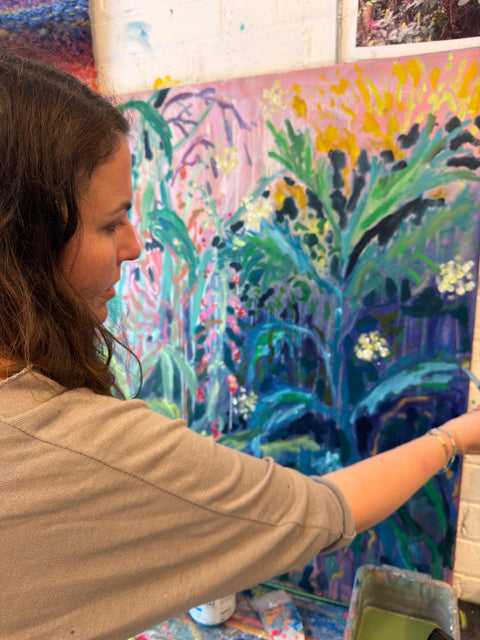
About the work
Gavin Atashkar’s paintings are built up through layered techniques - washing, dripping, scraping - that add both physical texture and a sense of movement and time. The surface is never passive. Looking closely, you can see the decisions accumulating: where paint has been pushed aside, where colour has been allowed to bleed, where a mark has been left or pulled back. It is a process that mirrors the natural world it depicts, where nothing is fixed and everything is in a state of becoming.
Her subjects - pond reflections, seasonal change, botanical forms - are never merely descriptive. They serve as metaphors for inner life: the seasons as a map of emotional states, the landscape as a site of spiritual inquiry. In ‘Seasons Come, Seasons Go’, that inquiry is focused through the lens of a single year, drawn from daily walks through Dartlands Nature Reserve, Dollis Valley and Brooke Farm in North London. The result is a body of work that is simultaneously hyper-local and universal - rooted in a specific place and yet speaking to something anyone who has ever waited for winter to end will immediately recognise.